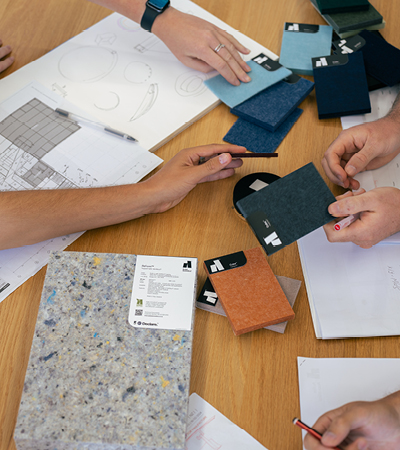
Good design is rarely the result of a single idea. It evolves through questioning, testing, collaboration, and a willingness to challenge what already exists. To further explore the thinking, decisions, and lessons that shaped Frontier™ Raft’s evolution, we sat down with Caitlin Easson, intermediate product designer.
Q: At a high level, what does the R&D process look like for your team?
A: It usually starts with defining the opportunity, which can come from customer feedback, installer insights, manufacturing challenges, or sustainability objectives. From there, it’s a very iterative process of research, prototyping, testing, and refinement.
What we learn from one product often helps shape the next.
Q: The project to create a new product is often informed by a need. What is the driving force behind redesigning an existing solution?
A: For us, it was really about asking how we could make Frontier Raft better, particularly when it came to embodied carbon. We looked across the whole product lifecycle for opportunities to simplify material use, embed circularity, and improve the overall system.
We also knew that to make a meaningful difference, those improvements needed to work at scale. That led to a simpler approach, including fully assembled beams that reduced work on site and made installation easier and more intuitive.
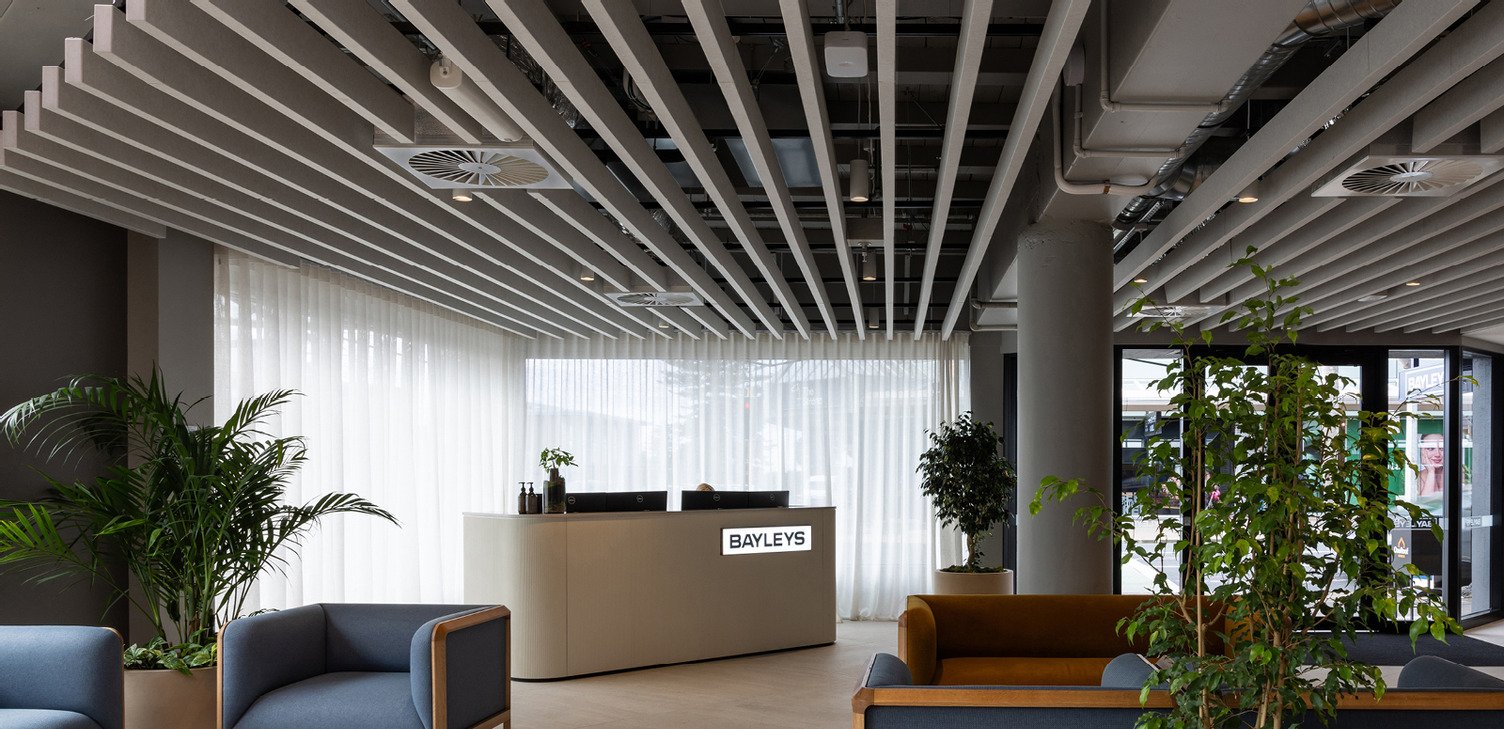
Frontier™ Raft Acoustic Beams
Autex Acoustics® Product Designer, Caitlin Easson
Q: What did the trialling of the new Frontier Raft look like?
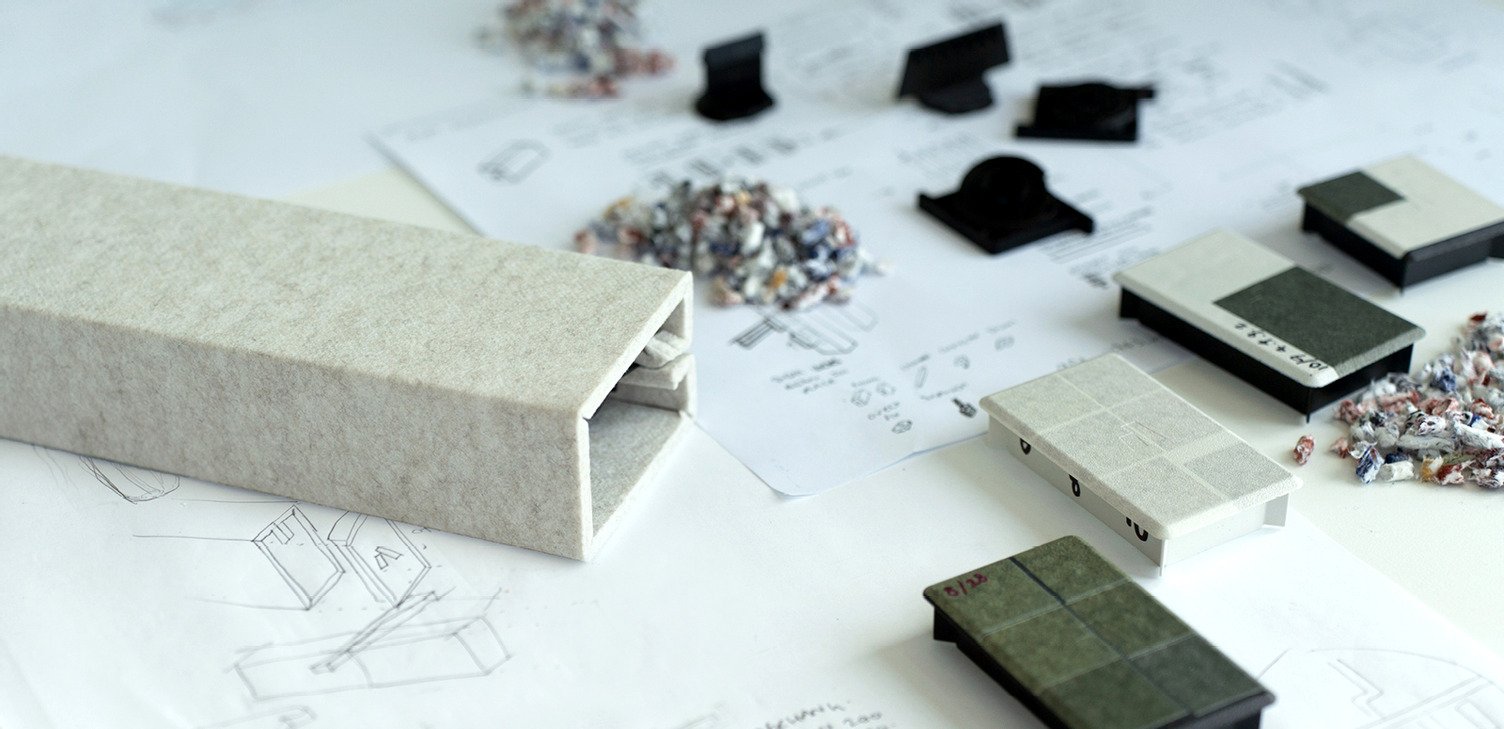
A: The trialling process moved through several stages, from individual component testing through to full-scale installations. One of the earliest prototypes was incredibly simple. We had bits of MDF holding the beam together and a power drill acting as the motor to release the clip. It wasn’t pretty, but that’s often how good ideas start. Those rapid prototypes helped us validate the concept.
As development progressed, we tested complete Raft assemblies to understand installation, handling, strength, repeatability, and overall system performance. We also looked beyond the finished ceiling, assessing packing, transportation, adjustment, and disassembly. That broader approach helped us validate the entire product experience rather than just the final visual outcome.
Q: There were a few pilot jobs that were used to test this new system. How important are these projects in the development process?
A: Pilot projects are incredibly important because they expose products to conditions that are difficult to recreate internally. One pilot highlighted that de-installation wasn’t performing as we needed.
Our Creative Director, Jonathan Mountfort, even challenged the existing mounting clip design. That became a significant turning point, giving us a solution that made installation and de-installation easier while allowing beams to be mounted at any angle. It was the right decision to pause and rework, and we focused on testing and refining it until we were confident it was ready.
“We looked across the whole product lifecycle for opportunities to simplify material use, embed circularity, and improve the overall system.”
Q: Creating componentry from 100% recycled material is a great achievement, but changing materials always brings challenges. What specific challenges did you face during the componentry development process?
A: The key challenge was understanding the behaviour of RePET and designing around its properties rather than expecting it to behave like the materials it was replacing. Recycled material can introduce variation, so we needed to carefully refine component geometries, tolerances, connections, and manufacturing processes to achieve reliable performance.
The components also needed to do more than simply contain recycled content. They had to improve usability, support efficient assembly and installation, and make de-installation easier so that materials could be separated and recirculated in the future.
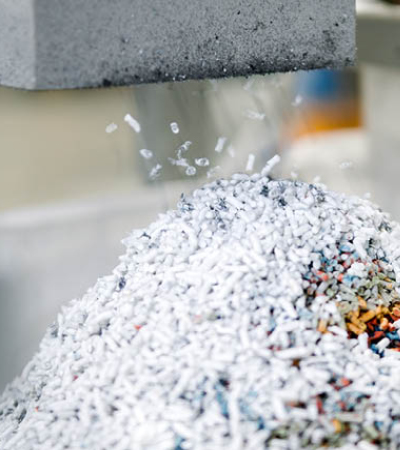
RePET pellets, used to make our Frontier™ Raft Components
Q: What is your favourite part of the new Frontier Raft system?
A: What I appreciate most is how performance, aesthetics, and circularity all come together. The finished ceiling feels clean and refined, but behind that simplicity is a smarter system with less material complexity, more recycled content, and improved installation and de-installation. The sustainability benefits are built into how the product works.
Q: What does sustainability mean to you as a designer? How does it inform your work?
A: For me, it means considering environmental impact from the very beginning of the design process. Circularity plays a big role in that, from recognising waste as a resource to designing products that can be maintained, disassembled, and recovered. The goal is to keep materials in use and retain their value for as long as possible.
Frontier™ Raft Components made entirely from RePET
Frontier™ Raft Components made entirely from RePET
Q: What are you most proud of now that the system has been launched globally?
A: I’m most proud that we’ve translated circular design principles into a commercially scalable product, turning material that would otherwise be considered waste into functional components while improving the system’s usability.
Personally, seeing installers use the new mounting clip was particularly rewarding. During one pilot, an installer looked at the installation guide once and never needed it again. That was a great indication that we’d created something genuinely intuitive.
Q: With this product now completed, what areas are you now looking to work on?
A: The project has created a strong foundation for applying the same thinking across other product systems. We’re continuing to explore how manufacturing waste can become a reliable resource, how components can work across multiple systems, and how products can be easier to maintain, adapt, disassemble, and recover.
Designing world-first technology for circular manufacturing is rarely straightforward. Through many challenges and breakthroughs, the journey ultimately delivered an innovation that is helping make circular manufacturing possible at Autex Acoustics®.
 New Zealand
 Australia
 United States
 United Kingdom
 Ireland